
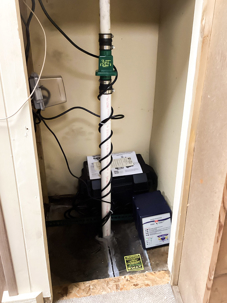
Most homeowners do not think about the sump pump until the basement is wet. The better time to decide whether it is dependable is on a dry day, with enough time to test the primary pump, backup pump, battery, alarm and discharge.
Age is useful, but the home's risk and the pump's actual condition matter more than one mandatory replacement number.
Test the system at least annually
Pour enough clean water into the pit to raise the float and confirm that the pump starts, lowers the level and shuts off. Go outside and verify discharge. Then test the backup according to its instructions.
Public flood guidance recommends a full primary-pump test annually and more frequent backup testing. Also test before the spring storm season, after plumbing work near the pit and after a long period with no operation.
Replacement signs
- The pump does not start every time the float rises.
- It runs but does not lower the water level normally.
- It makes new grinding, rattling or bearing noise.
- The housing, cord or switch is damaged or corroded.
- It cycles rapidly because the switch or pit arrangement is unsuitable.
- The check valve allows repeated backflow.
- The pump has experienced heavy service and is approaching the manufacturer's expected life.
- Replacement parts or a dependable test are not available.
Canada's flood-readiness guidance says sump pumps should generally be replaced around ten years, subject to manufacturer recommendations. A pump in a frequently active pit may deserve earlier replacement; a date alone cannot certify condition.
Consider the consequence of failure
A finished basement, stored valuables, basement bedroom or critical mechanical equipment raises the cost of waiting. In a high-risk home, proactive replacement and a tested backup may be easier to justify than running the primary pump until it fails.
Low-use systems still need testing. Long inactivity can leave a float stuck or a discharge blocked.
Replace the weak system, not just the pump
A new motor will not fix a small pit, poor switch clearance, frozen exterior line or water discharged back toward the foundation. Review:
- Basin size and cover.
- Pump capacity at actual head.
- Check valve and discharge diameter.
- Exterior routing and freeze protection.
- Dedicated electrical supply and alarm.
- Battery or generator backup.
Frequently asked questions
Should I replace a working pump because it is ten years old?
Treat ten years as a planning point, not a universal failure date. Review use, test results, manufacturer guidance and basement risk.
How often should the battery be replaced?
Battery chemistry and charger design vary. Test capacity and follow the backup manufacturer's replacement guidance.
Do I need two pumps in an unfinished basement?
Even an unfinished basement may contain a furnace, water heater, electrical equipment and stored belongings. Evaluate the damage that an outage could cause.
Know before the rain arrives
West Jefferson Plumbing & Heating provides sump-pump testing, repair, replacement and backup systems for Circleville and Central Ohio homes throughout Pickaway, Ross, Fairfield and Fayette Counties.
Suggested internal links: Sump Pump Services; Article 26 and Article 27 in this package Authoritative source: Canada sump-pump maintenance and replacement guidance