
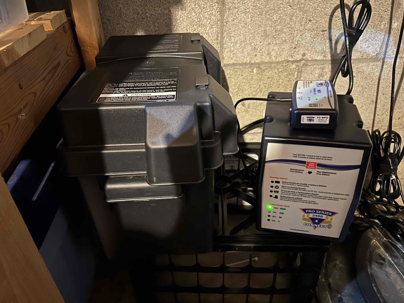
The power often fails during the same storm that sends the most water toward a basement. A battery-backup sump pump gives the home a second pump and an independent source of power when the primary system is unavailable.
It is a safety net, not unlimited flood protection.
What the backup protects against
A properly installed battery system can operate when:
- Utility power fails.
- The primary pump or switch fails.
- Water rises above the primary pump's capacity and reaches the backup float.
- A circuit or plug serving the primary pump is interrupted, depending on system design.
The backup float is normally set above the primary operating level so the two pumps do not compete during ordinary cycles.
Runtime depends on the storm
There is no honest universal answer such as “this battery lasts six hours.” Runtime depends on battery capacity and condition, pump draw, discharge head, cycle frequency, incoming water and controller efficiency.
A backup in a slowly filling pit may protect the home through a long outage. The same battery can drain quickly when the pump runs continuously. Product ratings should state the testing conditions, and the homeowner should know what alarm indicates low battery or pump operation.
The discharge is still a shared vulnerability
If both pumps connect to a clogged or frozen discharge, the battery cannot move water away. Check valves, pipe sizing and exterior termination must support the configuration. Some systems use independent discharges for added resilience.
Battery care matters
Battery type and maintenance requirements vary. Check terminals, fluid level where applicable, charger status, age and alarms according to the manufacturer. Replace the battery based on tested condition and product guidance—not only whether the indicator light is green.
Canada's public flood-readiness guidance recommends testing a backup pump several times per year. Simulate a primary-power failure according to the system instructions and confirm that water is actually discharged outside.
Battery backup versus a generator
A standby generator can operate the primary pump and other home loads for an extended outage while fuel remains available. It still has a start delay, maintenance requirements and load limits. A battery backup begins independently and also protects against some primary-pump failures.
For a finished basement, using both can provide layers of protection.
Frequently asked questions
Can I connect the primary pump to a small computer UPS?
Most ordinary UPS products are not designed for sump-pump starting current, moisture or required runtime. Use equipment listed and sized for the application.
Will a backup stop every basement flood?
No. Water can enter from surface flow, plumbing, sewer backup, foundation leaks or inflow beyond both pumps' capacity.
How do I know the backup is running?
Quality systems provide audible or connected alarms. Test the alarm and make sure household members know what it means.
Build layers before the storm
West Jefferson Plumbing & Heating installs and services primary and backup sump systems across Central Ohio, including Circleville and the surrounding counties. We can compare pump capacity, battery condition, alarms, generator plans and discharge design before the forecast turns severe.
Suggested internal links: Sump Pump Services; Electrical Services; Article 26 and Article 28 in this package Authoritative sources: Canada sump-pump and backup guidance; Fairfax County floodproofing practices