
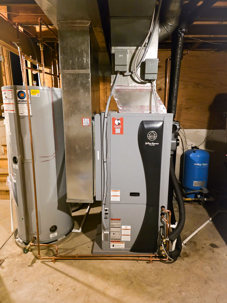
When someone asks what I would install in my own house, the answer is not one brand or one box. I would design a comfort system around the property, fuel access, construction and the way my family lives.
If I were building a rural Central Ohio home and had the budget to do it once, my ideal would combine hydronic radiant floors with variable-capacity geothermal, dedicated humidity control and balanced fresh-air ventilation.
That is a comfort-first design, not a minimum-cost prescription for every house.
Radiant heat where it is felt most
Warm floors create a different experience from forced air. A modulating condensing boiler could supply radiant zones in the main living areas, basement and garage where appropriate. A snowmelt zone for a limited walk or apron is possible, but it adds substantial capacity and operating cost and should be designed separately.
The boiler could also support domestic hot water through an indirect tank if the load and controls make sense. Combining functions requires careful priority control, water-temperature design and expansion protection.
Radiant slabs respond slowly. They reward steady operation and proper outdoor-reset controls rather than aggressive thermostat changes.
Geothermal for cooling and shoulder seasons
Radiant floors do not provide air conditioning. I would add a variable-capacity geothermal water-to-air system for cooling, air circulation and heating when spring and fall temperatures swing widely.
Ohio can require cooling in the afternoon and heat at night during shoulder seasons. A modulating heat pump can handle those changing loads without firing a larger boiler for every mild heating call.
Active dehumidification
Cooling alone does not always control moisture on warm, rainy days. A system with integrated reheat dehumidification—such as WaterFurnace's optional OptiDry technology—can cool the air below its dew point to remove moisture and then reheat the supply air so the house is not overcooled.
WaterFurnace states that OptiDry can operate in cooling-only, cooling-with-dehumidification and dehumidification-only modes. Whether that product or a separate whole-home dehumidifier is right depends on the final equipment and loads.
Fresh air and winter humidity
Tight construction needs a ventilation plan. I would use a properly sized energy-recovery ventilator or heat-recovery ventilator based on climate, occupancy and the building enclosure. It should be balanced and commissioned, not simply connected to a return duct and forgotten.
Winter humidification can improve comfort in a dry home, but it must be controlled to protect windows and walls during cold weather. The target should respond to outdoor conditions and the enclosure's condensation risk.
The controls are the system
Radiant zones, boiler reset, geothermal stages, humidity and ventilation can fight one another if controls are treated as separate accessories. The sequence should answer:
- Which system handles a mild heating call?
- When does the boiler take priority?
- How is slab temperature limited?
- When does dehumidification operate without overcooling?
- How does ventilation respond to occupancy and humidity?
- What loads operate on backup power?
Commissioning should verify the answers after the home is occupied.
Frequently asked questions
Is this combination overkill for a typical home?
It can be. The point is to show what a high-comfort integrated design looks like. Many homes can meet their goals with one well-designed heat pump, furnace or boiler system.
Can one geothermal system make radiant hot water and cool the house?
Water-to-water and combination approaches exist, but application temperatures, cooling distribution and controls require careful engineering. Do not assume a standard water-to-air unit can serve every load.
Why include air distribution if radiant heat is so comfortable?
Cooling, filtration, ventilation, dehumidification and rapid shoulder-season response all benefit from an air system.
Design the house as one system
West Jefferson Plumbing & Heating works with custom homes, geothermal, hydronics, plumbing and electrical systems across Central Ohio. For projects around Circleville and throughout Pickaway, Ross, Fairfield and Fayette Counties, our team can coordinate the comfort systems before construction makes the best options difficult.
Suggested internal links: HVAC Services; Indoor Air Quality; Article 8 and Article 16 in this package Authoritative sources: DOE Heat Pump Systems; WaterFurnace OptiDry announcement; EPA indoor humidity guidance