
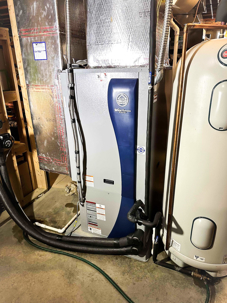
Both systems are heat pumps. One exchanges heat with outdoor air; the other exchanges heat with the ground or groundwater. That source difference shapes installation cost, cold-weather behavior, outdoor equipment and long-term planning.
There is no honest answer based only on which technology has the higher efficiency rating.
How the heat sources differ
An air-source heat pump works against outdoor conditions that change by the hour. During a Central Ohio cold snap, the source air is colder at the same time the house needs more heat. Modern cold-climate equipment is far more capable than older heat pumps, but output and efficiency still vary with temperature.
Geothermal uses relatively stable underground temperatures. DOE explains that temperatures around 30 feet below the surface are generally much steadier than outdoor air. That gives ground-source equipment favorable heat-exchange conditions in winter and summer.
Installation and site work
Air-source installation usually requires indoor equipment, an outdoor unit, refrigerant piping, electrical work and ducts or indoor heads. It generally has a lower first cost and less excavation.
Geothermal adds a ground heat exchanger or groundwater system. Drilling, trenching, site access, loop design and restoration increase project scope. In return, there is no outdoor condenser fan exposed to weather, and DOE estimates the buried loop can serve for 50 years or more when properly installed.
Comfort and sound
Equipment configuration matters more than the broad category. Single-stage geothermal can cycle; variable-capacity air source can maintain very steady temperatures. Compare modulation range, blower control, duct design and thermostat strategy.
Geothermal eliminates outdoor compressor and fan noise at the property line, though indoor equipment and loop pumps remain audible. Air-source equipment has improved dramatically in sound performance, especially at low capacity.
Backup heat
Either system may use supplemental heat. Air-source capacity is strongly affected by outdoor temperature. Geothermal capacity depends on entering water temperature, loop flow and system design. A poorly sized geothermal system can use more resistance heat than expected, while a well-selected cold-climate air-source system may cover most annual load.
Ask for modeled performance and balance points rather than relying on labels.
Operating cost and payback
DOE identifies geothermal as highly efficient but notes that installation can cost several times an equivalent-capacity air-source system. Payback depends on the system being replaced, fuel availability, utility rates, incentives, loop cost, financing and how long the homeowner expects to own the property.
If a home already has low-cost natural gas, geothermal economics differ from a rural home using propane or electric resistance. Environmental goals and resilience may also affect the decision.
Frequently asked questions
Is geothermal always cheaper to operate?
Not in every comparison. It is highly efficient, but operating cost depends on rates, pumps, backup heat, maintenance and system design.
Which lasts longer?
The buried loop can outlast either heat-pump cabinet. DOE estimates up to 24 years for indoor geothermal components and 50-plus years for ground loops, but these are estimates—not warranties.
Can geothermal cool and dehumidify?
Yes. Properly selected geothermal provides both heating and cooling. Variable capacity and dedicated reheat options can improve humidity control.
Compare the site, house and goals
West Jefferson Plumbing & Heating installs and services both geothermal and conventional heat pumps in Central Ohio. We help homeowners around Circleville and the surrounding counties compare the full project rather than a single efficiency number.
Suggested internal links: HVAC Services; Article 11, Article 13 and Article 15 in this package Authoritative sources: DOE Geothermal Heat Pumps; DOE Heat Pump Systems