
These systems are often discussed as if they compete for the same job. They do not. A water softener exchanges hardness minerals. Activated carbon adsorbs certain compounds that affect taste, odor and chemical content. Reverse osmosis pushes water through a membrane to reduce many dissolved substances.
The right question is not “Which system is best?” It is “What does the test show, and where do we need treated water?”
Water softener: scale control
Conventional cation-exchange softeners remove calcium and magnesium by exchanging them for sodium or potassium ions. They can reduce scale, soap consumption and mineral buildup in water-using equipment.
They require salt and regeneration water. EPA recommends demand-initiated controls and attention to water and salt efficiency. A softener does not disinfect water and should not be sold as a universal contaminant-removal system.
Activated carbon: taste, odor and selected chemicals
Carbon is commonly used for chlorine taste and odor and can adsorb various organic compounds. Performance depends on carbon type, bed size, flow rate, contact time and the contaminant. A small cartridge may exhaust quickly under a whole-house load.
Carbon can remove disinfectant residual, so whole-house systems require thoughtful maintenance to avoid biological growth downstream.
Reverse osmosis: point-of-use dissolved-solids reduction
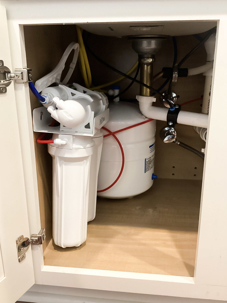
RO uses pressure and a semipermeable membrane. It can reduce many dissolved salts and specific contaminants when the system is certified and maintained for those claims. A kitchen-sink unit treats drinking and cooking water without processing every gallon used for bathing or toilets.
RO also sends a reject stream to drain. EPA's WaterSense program encourages efficient labeled point-of-use RO models. Pretreatment may be needed to protect the membrane from hardness, iron or sediment.
Why treatment trains are common
A well-water home might need sediment control, oxidation and filtration for iron or sulfur, a softener for hardness and point-of-use RO for drinking water. The order matters. Equipment that is correct individually can fail early when arranged incorrectly.
Municipal homes may need only a carbon drinking-water filter—or no treatment—depending on taste goals and testing. More equipment is not inherently better.
Verify certification and maintenance
Look for third-party certification to the standard and contaminant-reduction claim relevant to the application. Replace cartridges, sanitize equipment, maintain salt and test treated water as directed. No treatment system is “install and forget.”
Frequently asked questions
Will RO soften the whole house?
RO can reduce hardness, but whole-house RO is a specialized, water-intensive design. Most residences use a softener for whole-house hardness and RO at a drinking-water tap.
Does carbon remove hardness?
No. Standard activated carbon does not remove calcium and magnesium scale.
Should I treat all water?
Treat at the point of entry only when the issue affects the whole house. Point-of-use treatment can be more efficient for drinking-water concerns.
Treat only what needs treatment
West Jefferson Plumbing & Heating offers water testing, filtration, softening and purification options for Central Ohio homes. We serve Circleville and surrounding communities in Pickaway, Ross, Fairfield and Fayette Counties and explain the maintenance as clearly as the installation.
Suggested internal links: Water Filtration Systems; Water Purification Systems; Article 22–24 in this package Authoritative sources: EPA Home Drinking Water Filtration Fact Sheet; EPA water-softener guidance; EPA WaterSense treatment guidance