
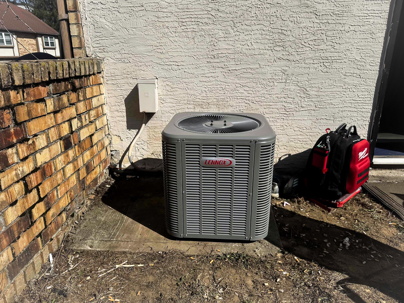
An air conditioner has two jobs in summer: lower the temperature and remove moisture. A home can reach 72°F and still feel clammy if the system satisfies the thermostat before it has enough coil time to drain moisture from the air.
This is a common Central Ohio problem because many summer hours are warm and humid without being close to the peak cooling temperature used for system selection.
Dehumidification depends on a cold coil and runtime
Moisture condenses when humid return air passes over an indoor coil that is below the air's dew point. The condensate then drains away. If the compressor runs only a few minutes at a time, the coil may get cold enough to cool the room but not stay active long enough for strong moisture removal.
That is one reason oversized single-stage equipment can feel less comfortable. It delivers a large amount of sensible cooling, satisfies the thermostat and shuts down.
Single-stage, two-stage and variable capacity
A properly sized single-stage system can manage humidity, especially at design load. Two-stage equipment can spend more time at its lower output during mild conditions. Variable-capacity equipment can run longer at low compressor and blower speeds, often creating better latent performance and steadier comfort.
Controls matter. If fan speed is too high, air spends less time across the coil. If the indoor fan runs continuously after the compressor stops, moisture left on the coil may re-evaporate into the house.
Other causes of high indoor humidity
- Outdoor air leakage through the building envelope.
- A wet crawlspace or basement.
- Unvented showers, cooking or clothes drying.
- A blocked condensate drain or dirty coil.
- Incorrect refrigerant charge.
- Duct leakage in an attic, crawlspace or garage.
- Ventilation equipment that is unbalanced or incorrectly controlled.
EPA recommends keeping indoor relative humidity below 60% and ideally in the 30–50% range. The right target within that range depends on comfort, building surfaces and outdoor conditions.
When a dedicated dehumidifier makes sense
Some homes have moisture loads that air conditioning alone cannot handle, particularly during rainy shoulder-season weather when very little cooling is needed. A properly sized whole-home dehumidifier can remove moisture independently of the thermostat's cooling call.
Portable units can be appropriate for a limited area, but capacity ratings, drainage, sound and operating temperature matter. A small unit in a large open basement may run constantly without controlling the whole space.
Frequently asked questions
Should I lower the thermostat to remove humidity?
That may create more cooling runtime, but it can overcool the house and waste energy. Correct sizing, airflow and dedicated humidity control are better long-term tools.
Should the fan be set to on or auto?
During cooling, auto is often better for humidity because the blower stops with the compressor. System-specific dehumidification controls may use other fan strategies.
Is 60% indoor humidity too high?
It is the upper limit in EPA guidance, not an ideal comfort target. Persistent readings near or above 60% deserve attention to moisture sources and equipment operation.
Solve the moisture source, not just the number
West Jefferson Plumbing & Heating evaluates cooling performance, airflow, equipment sizing and building moisture before recommending a dehumidifier. We serve Circleville and Central Ohio homeowners throughout Pickaway, Ross, Fairfield and Fayette Counties.
Suggested internal links: Indoor Air Quality; HVAC Services; Article 3 in this package Authoritative sources: EPA indoor-air guidance; DOE Heat Pump Systems
Homeowner question that inspired this article: A homeowner reports that new heat pumps cool quickly but do not dehumidify well