
Most of us remember the last time the power went out and the house went quiet. The furnace or air conditioner stopped, the sump pump fell silent while the rain kept coming, and you started opening the fridge as little as possible to save the food inside. If the outage lasted more than a couple of hours, you probably found yourself wondering how long your home and family could stay comfortable and safe without power.
For homeowners across Columbus and Central Ohio, that is not a once-in-a-lifetime event. Strong summer thunderstorms, fall windstorms, and winter ice can all knock out power with very little warning. Each time it happens, you face the same questions. How long will this last, what in my home is at risk, and is there anything better than just waiting and hoping the utility gets things back quickly?
At West Jefferson Plumbing and Heating, Inc., we have been helping Central Ohio homeowners answer those questions since 1976. Our family business has seen how outages affect real homes in West Jefferson, Hilliard, Grove City, Dublin, and neighborhoods all over Columbus. With licensed electricians and NATE-certified technicians on our team, we design and install standby generator systems that work with your existing heating, cooling, and plumbing equipment to help keep your home protected when the grid lets you down.
How Ohio Weather & An Aging Grid Put Columbus Homes at Risk
Columbus and the surrounding communities sit in a part of the country where weather can swing quickly and violently. In late spring and summer, fast-moving thunderstorms can bring high winds, heavy rain, and lightning that take down branches or entire trees. In the fall and winter, wet snow and ice can build up on power lines and tree limbs, and a single broken limb can pull down a line serving an entire block. Many neighborhoods around Columbus and in smaller towns like West Jefferson still have older, above-ground lines that are more vulnerable than buried service.
You feel those infrastructure realities every time the power drops. In summer, a few hours without air conditioning can make upstairs bedrooms unbearable, especially in older Central Ohio homes with less insulation. In winter, the stakes are even higher. When your furnace stops and temperatures outside sit below freezing, your home starts losing heat quickly. If an outage stretches into many hours, you can end up not only cold and uncomfortable, but also worried about frozen pipes in exterior walls or unheated basements.
Basements are another Columbus-area risk that many homeowners underestimate. Our region has plenty of homes with basements and relatively high groundwater. During heavy rain, sump pumps may run frequently just to keep water from rising. If the power fails in the middle of a storm, the pump stops right when it is needed most. A few hours can be the difference between a dry basement and inches of water soaking finished flooring, drywall, and belongings. Over the decades, we have helped many local families recover from that kind of damage, and it is a big reason why more homeowners are planning ahead instead of reacting after the fact.
What a Standby Generator Actually Does for Your Home
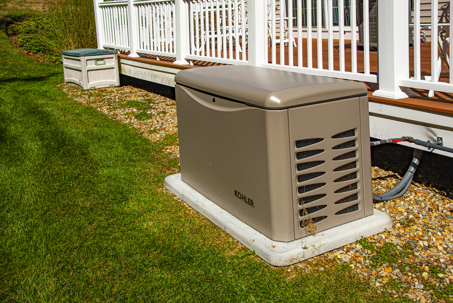
A standby generator is a permanently installed backup power system that sits outside your home, typically on a small concrete or composite pad, much like an air conditioner. Instead of dragging it out of the garage when the lights go out, it is already connected to your electrical panel and to a fuel source, usually natural gas or propane. It waits in the background and only comes to life when you need it.
The heart of a modern standby system is the automatic transfer switch. This device constantly monitors the power coming from the utility. When it senses that utility power has been lost for more than a few seconds, it sends a signal to the generator to start. Once the generator is running and stable, the transfer switch disconnects your selected circuits from the utility and connects them to the generator instead. When the grid power returns and stabilizes, the transfer switch quietly moves those circuits back to the utility and shuts the generator down.
From your point of view inside the home, this all happens with very little drama. You might notice the lights flicker briefly, or a short pause as some things restart, but you do not have to roll out extension cords, refill gas cans, or step outside in the middle of a storm. The furnace blower comes back on, the fridge keeps humming, the sump pump continues cycling in the basement, and key lights and outlets work just as they did before the outage. If you choose whole-home coverage, nearly everything that ran on utility power can continue to run on generator power within the generator capacity.
Designing that kind of seamless protection takes thoughtful planning and safe installation. At West Jefferson Plumbing and Heating, Inc., our licensed electricians handle the panel work and transfer switch wiring, and our team coordinates with your gas utility or propane provider as needed. Because we also service and install furnaces, air conditioners, and sump pumps across Central Ohio, we understand exactly what those systems need from a power standpoint. That means we can configure your standby generator so it supports your critical equipment reliably rather than just lighting a few lamps.
Standby Generator vs. Portable Generator vs. Doing Nothing
When you think about backup power, there are really three choices. You can do nothing and hope outages stay short. You can rely on a portable generator that you roll out when needed. Or you can install a standby system that turns itself on when the grid fails. Each path has real tradeoffs in cost, convenience, safety, and how much of your home you can keep running.
Doing nothing is obviously the cheapest option up front, but it means accepting every outage on the utility terms. If power goes out on a freezing January night in Columbus, your furnace will stop and your home temperature will start dropping right away. If heavy rain hits and the sump pump stops, you might start bailing water by hand or just hope the water table does not rise too far before power returns. Food in the fridge and freezer sits at risk. For some families, that level of risk is tolerable. For others, especially those with finished basements, home offices, or health concerns, it feels like rolling the dice.
Portable generators sit in the middle. A decent portable unit can keep a refrigerator and a few lights running, and in some setups can power a furnace blower through a manual transfer switch. But portables bring their own challenges. They must be stored, rolled outside, fueled with gasoline, and connected safely every time you use them. They cannot be operated in a garage or near windows because of carbon monoxide, so you need a safe, well-ventilated spot. During an outage, you must manage extension cords or decide which few circuits to feed, then refuel the generator every few hours. In a long storm, that can mean trips outside at night or in bad weather just to keep things going.
There is also a hard limit to what a portable generator can handle. Motors, like those in a sump pump or furnace, need extra power to start. A small generator that seems large enough on paper can bog down or trip when multiple loads try to start at once. For example, a sump pump might need 1,000 to 2,000 watts or more to start, a refrigerator another several hundred, and a furnace blower more on top of that. Trying to run central air conditioning from a typical portable is usually unrealistic. Managing all of that while juggling cords and fuel is a lot to ask in the middle of a stressful outage.
A standby generator costs more to install, but it removes almost all of that friction. It uses natural gas or a large propane tank, so there is no midnight gas run. It connects to your panel through an automatic transfer switch, so it powers selected circuits safely without extension cords. Because we size the system based on actual starting and running loads in your home, we can design it to handle a sump pump cycling during heavy rain, a furnace blower starting up, and a refrigerator compressor kicking on. For many Columbus homeowners, the question becomes not whether they can keep a light or two on, but whether they want their core systems to keep working almost as if the outage never happened.
As a contractor that has seen both sides across Central Ohio, we know portable units can be a good fit for some situations. We also see cases where people overestimate what a small portable can do, or set them up in ways that create safety hazards. When we help you look at the options, we focus on how you actually live in your home, how often you see outages, and what risks matter most to you. That way you can decide whether a standby generator is worth the investment for your family instead of relying on guesswork.
What Installation Really Looks Like, From Permits to First Test
Many homeowners imagine generator installation as a messy, disruptive project. In reality, when it is planned and handled well, the process is straightforward and usually completed over a relatively short period. Knowing what to expect can make the decision feel much less intimidating.
It typically starts with an in-home visit. We walk through your home with you to understand what you want to protect, inspect your electrical panel, note the location of your gas meter or propane tank, and look at possible generator locations outside. Based on that visit, we put together a written proposal that outlines the recommended generator size, transfer switch setup, and any electrical or gas upgrades that may be needed. You see the full scope before you commit.
Once you approve the project, we handle the behind-the-scenes work such as securing necessary permits and coordinating with the gas utility or propane provider if a new line or meter capacity check is required. On installation day, our crew arrives on time, prepares the site for the pad, sets the generator, and completes the electrical and gas connections. Inside, we install the automatic transfer switch and make any adjustments to the panel so your chosen circuits are fed by the generator during an outage.
There are important rules that govern where a standby generator can sit. It needs proper clearance from windows, doors, vents, and neighboring structures to keep exhaust away from living spaces and to meet manufacturer and code requirements. It must also be placed where noise will be acceptable for you and your neighbors. In many Columbus neighborhoods with smaller lots, we take extra care to find a location that balances safety, compliance, and everyday livability.
When everything is connected, we test the system carefully. That includes verifying fuel connections, checking voltage and frequency output, simulating a power outage so you can see how the transfer switch responds, and walking you through what to expect during the generator regular self-tests. Our customers regularly mention that our technicians explain what they are doing, answer questions clearly, and leave the work area clean. That reflects our commitment at West Jefferson Plumbing and Heating, Inc. to do the job right the first time and treat every home with respect.
Owning a Standby Generator: Maintenance, Testing & Reliability
Like any mechanical system, a standby generator needs some care to stay ready for the next outage. The good news is that modern units are designed to be relatively low-maintenance for homeowners. Most systems are set up to run a brief self-test once a week. During that test, the generator starts, runs for a short time, and then shuts down. You can usually hear it and take comfort in the fact that it is still working.
Beyond self-tests, standby generators benefit from regular professional maintenance. That typically includes changing the oil and filters at recommended intervals, checking and cleaning air filters, testing the battery, confirming that the transfer switch operates properly, and inspecting fuel lines and electrical connections. In a region like Central Ohio, where summer heat, winter cold, and pollen can all affect outdoor equipment, these checks help keep your generator from letting you down just when you need it most.
There are also simple things you can do as a homeowner. Keeping plants and debris away from the generator helps it get proper airflow. Listening for the weekly self-test and calling if something sounds unusual can catch issues early. What you should not do is attempt to open up the generator or adjust wiring yourself. Those tasks are best left to licensed professionals who understand both electrical safety and the manufacturer requirements.
Because West Jefferson Plumbing and Heating, Inc. already maintains HVAC and plumbing systems for many families across Columbus and Central Ohio, adding generator maintenance to that relationship is a natural fit. Our team can schedule annual or seasonal checkups for your generator along with other home comfort equipment, so you have one trusted company watching over the systems that keep your home safe and comfortable. When storms hit and questions come up, you talk to real people in our local office, not a call center in another state.
Is a Standby Generator Right for Your Columbus Home?
Not every home needs the same level of backup power. The right decision depends on your specific risks, priorities, and budget. You are a strong candidate for a standby generator if you rely heavily on sump pumps to keep a basement dry, if you have a finished basement full of belongings, if someone in your home uses powered medical equipment, or if you have experienced multi-hour outages that left your family cold or overheated. A home office that must stay connected, or frequent travel that keeps you away during storm season, can also tip the scales toward automatic backup.
On the other hand, if outages on your street are rare and very short, and you do not have much at risk in the basement or rely on powered medical devices, you may decide that a smaller solution or even doing nothing still fits your comfort level. The key is to make that choice based on clear information about what a standby generator can do, how it is sized, and what it costs, instead of on assumptions or a rough guess about what a portable unit might cover.
As a third-generation, family-owned company rooted in Central Ohio, our goal at West Jefferson Plumbing and Heating, Inc. is not to push the largest possible system into every home. We focus on listening, explaining your options in plain language, and designing a solution that fits how you live. The next step is simple. We come out, walk your home with you, review your panel and key systems, and give you a detailed, no-pressure proposal so you can decide with confidence whether a standby generator is the right investment for your Columbus home.
Talk With a Local Team About Protecting Your Home From the Next Outage
Power outages in Central Ohio are not going away. Weather patterns, mature trees, and aging infrastructure all play a role, and no homeowner can control when the next storm will knock out the grid. What you can control is how prepared your home is when it happens. A properly sized, professionally installed standby generator can keep your heat or air conditioning running, help protect your basement from flooding, safeguard your food and medicine, and give you a sense of security even when the rest of the street is dark.
If you are ready to explore whether a standby generator makes sense for your Columbus-area home, we are here to help. Our team at West Jefferson Plumbing and Heating, Inc. will answer your questions, look closely at your home electrical and mechanical systems, and provide clear recommendations based on nearly five decades of serving Central Ohio neighbors. There is no one-size-fits-all answer, but there is a right answer for your home, and we would be honored to help you find it.
Call (740) 318-2868 to schedule a standby generator consultation with our local team.